Showrooms By

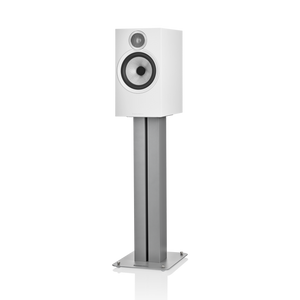
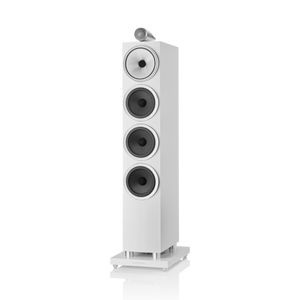
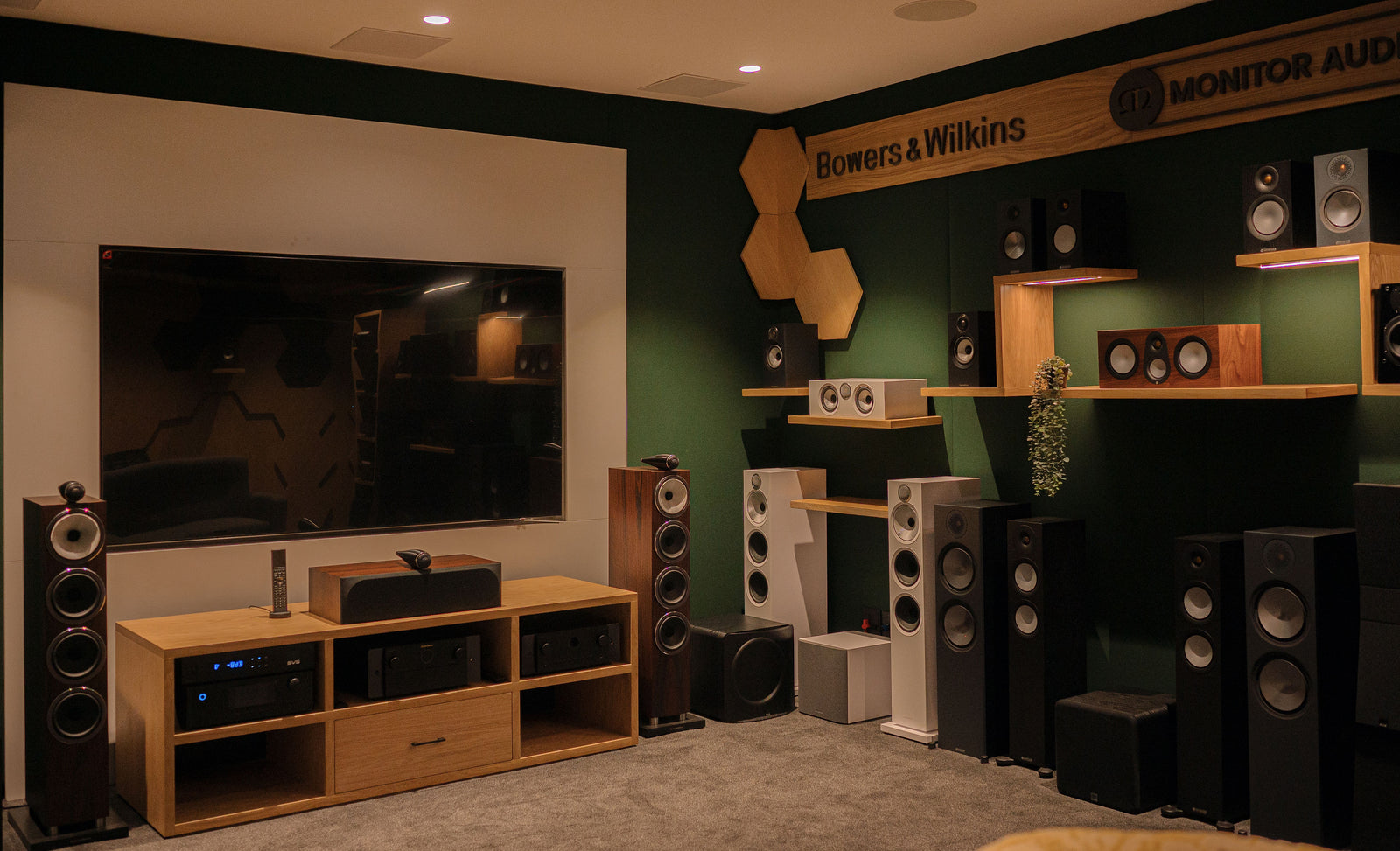
When comparing bookshelf and floorstanding speakers from brands like Polk Audio, Bowers & Wilkins, and Monitor Audio, the difference mainly comes down to scale and application. Bookshelf speakers are smaller and more space-conscious, designed for flexibility and precise, focused listening in a wide range of environments. Floorstanding speakers are larger and more commanding, built to deliver a broader, more effortless sound that fills bigger rooms with ease. Both serve the same purpose at a high level, but where bookshelf speakers prioritize versatility and subtlety, floorstanders lean toward presence and impact.
In premium surround sound systems from brands like Bowers & Wilkins, Monitor Audio, and Polk Audio, the speakers are typically passive and require an external amplifier or AV receiver to operate.
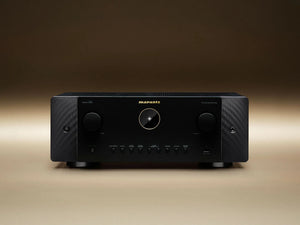
This is where electronics from companies like Marantz, Denon, Classe, and WiiM come into play, providing the necessary power and signal processing to bring the system to life.
The amplifier or receiver must be matched to the speaker configuration such as 5.1 or 7.2 where the first number represents the main speaker channels and the second indicates subwoofer outputs.
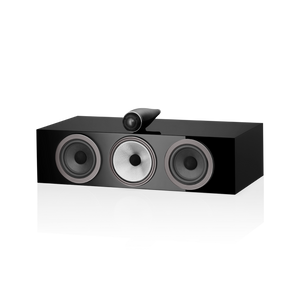
A typical setup includes front left and right speakers, a center channel for dialogue clarity, and surround speakers for immersion, with additional channels expanding the soundstage further. At this level, a well-matched combination of speakers and amplification is essential to achieve a cohesive, high-performance home cinema experience.
Living Switched on
Unit 1, 7 Gold Street, Northgate Business Park
Brooklyn, Cape Town, Western Cape, 7405